

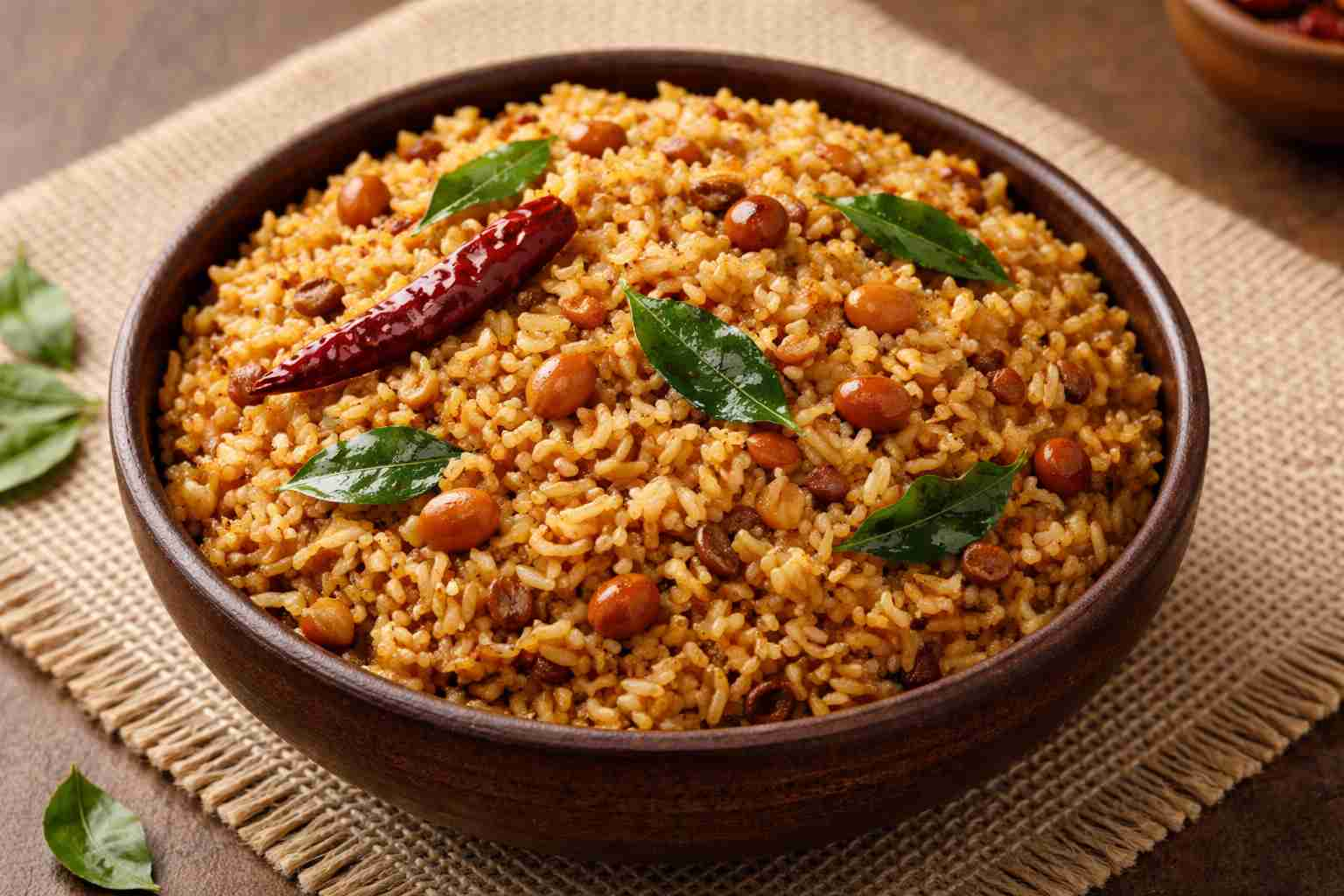
Puliogre is a popular South Indian rice dish known for its tangy tamarind flavour, aromatic spices, and satisfying combination of textures. Also commonly spelled puliyogare or puliyodarai, this traditional preparation is especially associated with Karnataka and Tamil Nadu. It transforms simple cooked rice into a flavourful meal using tamarind, a spiced seasoning, and ingredients such as peanuts, curry leaves, and lentils.
The dish is appreciated for its balance of sour, spicy, salty, and mildly sweet flavours. It is often prepared for everyday meals, lunch boxes, festivals, and religious occasions. Thanks to its distinctive taste and straightforward ingredients, puliogre remains a favourite among people who enjoy traditional South Indian cuisine.
What Is Puliogre?
Puliogre is a traditional tamarind rice preparation in which cooked rice is mixed with a tangy, spiced tamarind mixture. The word is associated with the idea of sour or tangy rice, reflecting the important role tamarind plays in its flavour.
Although the dish is enjoyed across South India, recipes differ by region and household. Karnataka-style puliyogare often features a roasted spice blend, while Tamil Nadu’s puliyodarai commonly uses a prepared tamarind paste or seasoning known as pulikachal.
Both versions combine rice with a richly seasoned tamarind mixture to create a dish that is full of flavour without requiring a separate curry. Peanuts, sesame seeds, mustard seeds, dried red chillies, and curry leaves are frequently used to enhance the taste.
Ingredients Used in Puliogre
The ingredients in puliogre work together to create its characteristic tangy and aromatic profile.
Rice
Cooked rice forms the foundation of the dish. Medium-grain or long-grain rice can be used, provided the grains remain separate after cooking. Rice that is cooled slightly before mixing is often easier to handle.
Tamarind
Tamarind provides the signature sourness. It is usually soaked in warm water and squeezed to extract its pulp, which is then cooked with spices to develop a concentrated flavour.
Mustard Seeds and Curry Leaves
Mustard seeds are added to hot oil to create an aromatic tempering. Curry leaves contribute a fresh, herbal fragrance that is characteristic of many South Indian rice dishes.
Peanuts and Lentils
Roasted or fried peanuts add crunch and a nutty flavour. Chana dal and urad dal are also commonly included, providing additional texture and depth.
Dried Red Chillies and Spice Powder
Dried red chillies supply heat, while coriander seeds, fenugreek, cumin, and other spices may be included in a regional seasoning blend. Some recipes also use turmeric for colour.
Sesame Oil
Sesame oil is a traditional choice in many versions of the dish. Its distinctive aroma complements the tamarind and roasted spices, although other cooking oils may also be used.
How to Prepare Puliogre
Making puliogre at home involves preparing the rice, cooking the tamarind mixture, and combining the two.
Step 1: Cook the Rice
Cook the rice until tender but not mushy. Spread it on a wide plate and allow it to cool slightly so the grains remain separate when mixed with the seasoning.
Step 2: Prepare the Tamarind Extract
Soak tamarind in warm water, then squeeze and strain the pulp. Remove any seeds or fibrous pieces to obtain a smooth extract.
Step 3: Make the Tempering
Heat sesame oil in a pan. Add mustard seeds and allow them to crackle. Stir in dried red chillies, curry leaves, peanuts, chana dal, and urad dal as desired. Cook until the ingredients become fragrant and lightly golden.
Step 4: Cook the Tamarind Mixture
Add the tamarind extract, turmeric, salt, and the chosen spice blend. Simmer the mixture until it thickens and the raw smell of tamarind disappears. Some recipes include a small amount of jaggery to balance the sourness.
Step 5: Mix with Rice
Add the cooked rice gradually and mix gently until the seasoning coats the grains evenly. Allow the dish to rest briefly before serving so the flavours can develop.
What Does Puliogre Taste Like?
Puliogre is recognised for its bold, tangy flavour. Tamarind provides the main sour note, while roasted spices create warmth and complexity. Peanuts contribute crunch, and curry leaves give the dish its characteristic aroma.
Depending on the recipe, the flavour may be more sour, spicy, nutty, or mildly sweet. The rice absorbs the seasoning, creating a balanced dish that is flavourful without necessarily being heavy.
Its combination of contrasting tastes makes it a distinctive alternative to plain rice or mildly seasoned rice preparations.
Is Puliogre Healthy?
The nutritional value of puliogre depends on the ingredients, portion size, and quantity of oil used. Rice provides carbohydrates for energy, while peanuts contribute protein, unsaturated fats, and other nutrients. Lentils can add some protein and fibre, and spices contribute flavour without requiring large amounts of additional seasoning.
However, generous quantities of oil, salt, or sweeteners can increase the dish’s calorie or sodium content. A moderate portion served with vegetables, lentils, or yoghurt can form part of a balanced meal.
Puliogre is not a treatment for any medical condition, and its nutritional benefits depend on the overall diet.
What to Serve with Puliogre
Puliogre can be enjoyed on its own or with simple accompaniments that complement its strong tamarind flavour. Popular options include:
- Papad: Adds a crisp texture alongside the soft rice.
- Curd or yoghurt: Provides a cooling contrast to the tangy spices.
- Potato fry: Offers a savoury side with a crisp exterior.
- Vegetable poriyal: Adds vegetables and balances the meal.
- Pickles: Can enhance the meal, although the combined saltiness should be considered.
The dish is also convenient for packed lunches and picnics because it can be prepared ahead of time and served at room temperature.
Explore Traditional Indian Flavours at Shalimar
At Shalimar, discovering regional Indian cuisine offers an opportunity to appreciate the diversity of ingredients and cooking traditions found across the country. South Indian dishes are particularly known for their creative use of tamarind, rice, lentils, coconut, and aromatic spices.
Puliogre is a wonderful example of this culinary heritage. Its distinctive tanginess and roasted spice flavours demonstrate how a few carefully combined ingredients can turn everyday rice into a memorable dish. Guests can check Shalimar’s current menu to explore the available rice dishes and regional specialities.
Conclusion
Puliogre is a traditional South Indian tamarind rice dish that combines cooked rice with a tangy tamarind mixture, aromatic spices, crunchy peanuts, and fragrant curry leaves. Its distinctive flavour, flexible preparation, and convenient serving style have made it a popular choice for everyday meals and special occasions.
Whether enjoyed with yoghurt, papad, or vegetable sides, this dish offers a delicious introduction to the rich and varied traditions of South Indian cooking.
Suggested Category: Indian Food / South Indian Cuisine