

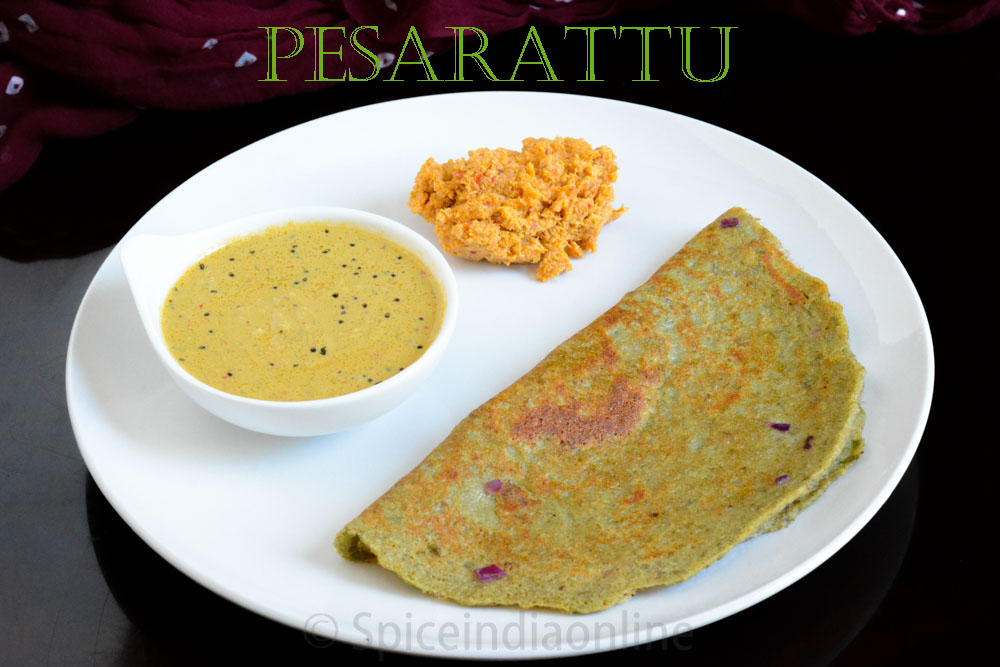
Pesarattu is a traditional South Indian breakfast dish known for its crisp edges, savoury flavour, and nutritious ingredients. Originating in Andhra Pradesh, it is a type of dosa made primarily from green gram, also called whole green mung beans. Unlike regular dosa, which is usually prepared with fermented rice and urad dal batter, pesarattu can be made without fermentation, making it a convenient option for home cooks.
This popular dish is often served with coconut chutney, ginger chutney, or upma. Its combination of protein-rich lentils, aromatic spices, and a satisfying texture makes it a favourite among people who enjoy traditional Indian breakfasts. With a few simple ingredients and the right cooking technique, you can prepare a delicious pesarattu recipe at home.
What Is Pesarattu?
Pesarattu is a savoury, pancake-like dish prepared from soaked and blended whole green gram. It resembles dosa in appearance but has a distinct flavour and texture because green gram is the primary ingredient.
The dish is especially popular in Andhra Pradesh and is commonly enjoyed for breakfast or as a light meal. Some versions include rice to improve the texture, while others use only green gram. Ginger, green chillies, cumin seeds, and coriander leaves are frequently added to enhance the flavour.
A popular variation is MLA pesarattu, which is served with upma inside or alongside the dosa. This combination offers a satisfying mix of crispness and softness.
Ingredients for Pesarattu Recipe
Before starting, gather the following ingredients:
- 1 cup whole green gram (green moong beans)
- 2 tablespoons rice, optional
- 1 small piece of fresh ginger
- 1–2 green chillies
- ½ teaspoon cumin seeds
- A handful of fresh coriander leaves
- Salt to taste
- Water as needed for blending
- Oil or ghee for cooking
- Finely chopped onion, optional
These ingredients create a traditional savoury flavour. Rice can be included for a slightly different texture, but it is not essential.
How to Make Pesarattu Step by Step
Follow these steps to prepare a flavourful dosa with crisp edges and a tender centre.
Step 1: Wash and Soak the Green Gram
Rinse the green gram thoroughly under running water to remove dust and impurities. Transfer it to a bowl, cover with plenty of water, and soak for approximately four to six hours or overnight.
If you are using rice, soak it separately or together with the green gram. Drain the soaking water before blending.
Step 2: Prepare the Batter
Place the soaked green gram in a blender with ginger, green chillies, cumin seeds, and a little water. Blend until you obtain a smooth or slightly coarse batter.
Add water gradually. The consistency should be pourable but thick enough to spread across a hot pan. Add salt and chopped coriander leaves, then mix well.
Unlike conventional fermented dosa batter, this batter does not need to rest overnight. You can cook it soon after preparation.
Step 3: Heat the Pan
Place a flat non-stick or cast-iron pan over medium heat. Allow it to become hot, then lightly grease the surface with oil.
To check whether the pan is ready, sprinkle a few drops of water onto it. They should sizzle and evaporate quickly. Reduce the heat slightly if the pan becomes excessively hot.
Step 4: Spread the Batter
Pour a ladleful of batter into the centre of the pan. Using the back of the ladle, spread it outward in circular movements to create a thin, even dosa.
Sprinkle chopped onions over the surface if desired. Press them gently into the batter so they adhere while cooking.
Step 5: Cook Until Crisp
Drizzle a little oil around the edges and allow the pesarattu to cook until the underside becomes golden and crisp. The surface should look mostly cooked before you attempt to turn it.
Flip it carefully if you prefer cooking both sides. Cook briefly on the other side, then fold the dosa and transfer it to a plate.
Repeat the process with the remaining batter, lightly greasing the pan when necessary.
Tips for Making Perfect Pesarattu
A few practical techniques can improve the taste and texture of this traditional dish.
Soak the beans properly: Adequate soaking softens the green gram and makes blending easier.
Control the batter consistency: Very thick batter can produce a heavy dosa, while overly thin batter may be difficult to spread evenly.
Use medium heat: Excessive heat can brown the outside before the inside cooks properly.
Spread the batter thinly: A thinner layer generally produces crispier edges.
Adjust the seasoning: Ginger, cumin, green chillies, and coriander can be increased or reduced according to your taste.
Serve immediately: Pesarattu is best enjoyed fresh from the pan, when its edges are crisp and its centre remains tender.
What to Serve with Pesarattu
Pesarattu pairs well with several traditional Indian accompaniments. Ginger chutney is a particularly popular choice because its sharp, tangy flavour complements the earthy taste of green gram.
Other suitable options include:
- Coconut chutney: Adds a creamy texture and mild sweetness.
- Tomato chutney: Provides a tangy, savoury contrast.
- Upma: Creates the popular combination known as MLA pesarattu.
- Sambar: Adds a warm, spiced lentil-based accompaniment.
You can serve it for breakfast, brunch, or a light evening meal.
Is Pesarattu a Healthy Breakfast Choice?
Green gram provides plant-based protein, dietary fibre, folate, and several important minerals. Because this dish is made primarily from whole mung beans, it can offer more protein and fibre than some breakfast options made mainly from refined flour.
Its nutritional value depends on the portion size, cooking oil, and accompaniments. Using a moderate amount of oil and pairing the dosa with chutney or vegetables can help create a balanced meal.
Although pesarattu can be a nutritious choice, it is not automatically low in calories. The final nutritional content varies according to the recipe and preparation method.
Enjoy Traditional South Indian Food at Shalimar
At Shalimar, exploring Indian cuisine means discovering regional dishes that combine simple ingredients with distinctive cooking techniques. Pesarattu reflects the food traditions of Andhra Pradesh through its use of green gram, fresh spices, and a straightforward preparation method.
Whether you enjoy it with ginger chutney, coconut chutney, or upma, this dish offers a flavourful way to experience South Indian breakfast culture. Check Shalimar’s current menu to discover the regional specialities available.
Conclusion
This pesarattu recipe shows how whole green gram can be transformed into a delicious, savoury dosa with crisp edges and a tender centre. With a little soaking, simple blending, and careful cooking, you can prepare this traditional Andhra favourite at home without waiting for fermentation.
Serve it hot with your favourite chutney or a portion of upma for a satisfying South Indian meal.
Suggested Category: Indian Food / South Indian Cuisine